Tuesday, 1 April 2014

Welcome to Issue Nine of Razzmatazz

Well Hello There!

Welcome to Issue Nine of Razzmatazz
Are you a fan of Wuthering Heights, The Man with the Child in his Eyes, Babooska, Sat On Your lap, Running Up That Hill, Hounds of Love, Don't Give Up, The Sensual World, Rubberband Girl, Moments of Pleasure?


Happy Birthday


And Finally Happy Birthday Al Pacino
Al says: "Sometimes you win, sometimes you learn."

Friday, 21 March 2014

Welcome to Issue Eight of Razzmatazz


Hello!
45 years ago this album was released...
Forget the first and second Velvet Underground albums. They are so revered, over-written about, hailed and acclaimed, set upon plinths in the Rock'n'Roll Hall Of Fame and worshiped by all of Those Who Know and the rest of us who unquestioningly follow the pointing fingers of Those Who Know that it is impossible anymore to hear the music. It is easy to admire 'The Velvet Underground & Nico' and 'White Light/White Heat'  - because the band deliberately set out to make records that would impress the cognoscenti; they knew which buttons to push (songs about S&M and drugs, dressed in distorted, discordant and ugly noise) - if you buy into that living-on-the-edge pose.
  The Velvets' third, eponymous, album is - due to its absence of shock tactics - the real deal. Unpretentious (the nine-minute silliness of 'The Murder Mystery' aside), lyrically and instrumentally spare - which must have been quite a sonic slap in the face for 1969, after Beatles-led advances in studio sophistication and the rise of the guitar hero (Clapton, Hendrix, Page) and the advance towards muso virtuosity - they provide a sound that is entirely simpatico with the album sleeve, an intimate Billy Name black-and-white snap of the group in drab duds (only Mo Tucker's shiny blouse hints at their glamorous job). The CD cover includes a second photo taken that night - and it's pleasing to see that, in both, Lou Reed is in relaxed mood, pulling non-rock-star silly faces.
  White America's musical contribution is Country & Western and, though they share the same tenets of rhythmic simplicity, the Velvet Underground in almost other respect rejects the aspirations of the pioneer spirit, the religious fervour, the epic landscapes, the scorched earth and the bountiful harvests. No, their music is City & Eastern - it's squalid tenement blocks permanently in a skyscraper shadow, it's the stink of half-chewed hamburgers, the taste of bummed cigarettes and cafe coffee, it's black and white TVs that can't get a decent reception (so they never saw Neil Armstrong & co. landing on the moon). There's no flowery poetry here, no genius musicianship. There's no fury in the playing, no ecstatic visions, and very little tension. They sound so tired ("Help me in my weakness," they sing plaintively in the very pretty "Jesus"), the backbeat is so slack it's almost an afterthought, the vocal occasionally barely rises to a spoken whisper. But these are not faults. These are the elements - like Lou's goofy self-mocking giggly vocal on "Beginning To See The Light" - that give the record a rare humanity. It's an open-hearted warts-and-all portrait of young, vulnerable people in all their yearning, keening, plain-speaking, perfect imperfection.

  Some records hit you instantly. They are brash and loud and command your attention. This one is like your shy friend who has been sitting just out of your eyeline for a long time before    you notice him/her. You have to make the first move and, though initially reticent and withdrawn, your friend, like a flower, will open his/her petals and reveal a beauty in the sunniness of your smile.
Happy Birthday to Spike Lee March 20th 57 years young!

Mr Lee says: "I think people who have faults are a lot more interesting than people who are perfect."

Saturday, 1 February 2014

Welcome to Issue Seven of Razzmatazz


Well, Hello there! This month Orange Juice are to re-release their four magnificent albums.

Orange Juice were a huge influence on The Smiths, Belle & Sebastian, Franz Ferdinand.
Alex Kapranos: "Whenever I listen to Orange Juice I feel overwhelmed with idealistic optimism. I'm still in awe of the fact that they had the guts to do it." The reissues follow Domino records release of Coals to Newcastle, a 7 disc anthology.
Formed in 1979 by Edwyn Collins, James Kirk and Dave McClymont (bass) and Steve Daly (drums).
You Can't Hide Your Love Forever, Rip It Up, Texas Fever, The Orange Juice.
And Finally... Happy Birthday to Mr Bob Marley!
Marley says: "One good thing about music is when it's hits you, you feel no pain."


Thursday, 2 January 2014

Welcome to Issue Six of Razzmatazz

Happy New Year and Happy 40th Birthday to:
Happy birthday also to Granmaster Flash
  • Born Joseph Saddler, he is the leader of the influential hip hop group Grandmaster Flash and the Furious Five and one of the pioneers of hip hop DJing.He is credited with the invention of the first crossfader, which he made by sourcing parts from a junkyard in the Bronx.
    Flash says: "Normal kids in their teens want to go and date girls and do mischievous things, your hormones are jumping around, but I stayed in my bedroom in search of something."


Wednesday, 11 December 2013

Welcome to Issue Five of Razzmatazz

MERRY CHRISTMAS TO ALL OUR READERS!!! THANKS FOR YOUR SUPPORT!
What were the best albums of 2013?
Josh's Top Five:
5) Snapshot by The Strypes

4) Walkin On A Pretty Daze by Kurt Vile
3) Elements of Light by Pantha Du Prince
2) Shangri La by Jack Bugg
1) Melt Yourself Down by Melt Yourself Down
Kitty's Top Five:
5)  Push The Sky Away by Nick Cave & The Bad Seeds
4) Red Hot & Fela by Various Artists
3) Random Access Memories by Daft Punk
2) Matangi by MIA
1) AM by Arctic Monkeys

------------------------------------------------------------------------------------------------------------
And finally... HAPPY BIRTHDAY TO... RICHARD PRYOR

The best stand up comedian of all time was born on the first of December 1940 and sadly died of the 10th of December 2005.
Merry Christmas!

Friday, 1 November 2013

Welcome to Issue Four of Razzmatazz

Macca's Back
PAUL MCCARTNEY: 'NEW' (2013)

So Lord Sir Macca has returned with his 394th album, released just in time for sticking in the  Christmas stockings of bust baby-boomers, worn-out groovers, frail and weedy pot-heads and un-embarrassable dancing uncles. Why does he do it? Isn't he rich enough? Surely he doesn't need any more islands stacked sky-high with tenners? Does he get some kinky kick from the online insulters who, knowing nothing of him, point at his Herman Munster Frankenmullet and laugh? Why doesn't he retire and let the world of Pop be run by da kidz? For a legitimate reason for his reluctance to hang up his plectrum, let's turn to another mad-haired Scouser OAP who still rampages the stages of theatres. Ken Dodd, when asked about the thought of quitting by Bob Monkhouse ten years ago, replied that retirement was when you stopped doing the job you didn't like. And McCartney is no reluctant performer. It's not just some job of work for him; it's his compulsion, it's his permanent itch. What would he do otherwise? He knows no other way of passing the time.
  And it doesn't really matter whether the records are good or bad, whether they're inventive or dull, pleasant or painful, brilliant or plain. That's not for him to decide. He hasn't the time to discern the qualities. He is, to his detriment and benefit, a great believer in the random aspect process and the first thought/best thought policy, and will leave some lyrical gobbledegook in place, simply because it sounds good to him. 'C Moon' finds him trilling that "I'd never get to heaven if I fill my head with glue", and 'Monkberry Moon Delight' finds him screaming about sitting in the attic with a piano up his nose. Does this mean anything? Should it? It's a delight that McCartney eludes the didacticism and naked confessionalism of Lennon's solo output (God, all those bloody one-dimensional Yoko songs! It was like being cornered by a humourless pub bore droning on about his car or Sunderland's chances this season. Very early on in his solo career, Macca trod lightly on the same espouse-the-spouse path as Lennon - e.g. 'The Lovely Linda' - but realised very swiftly that this was a creative cul-de-sac, the wrong kind of self-indulgence). McCartney's songs are as empty or full as you wish them to be. When, on 'Band On The Run', he sings "The rain exploded with a mighty crash as we fell into the sun", are we supposed to take this literally or metaphorically? McCartney litters his songs with lyrical red herrings, blue meanings or bare-faced codswallop  - who is Billy Budapest and why has he got Macca's pyjamas? Is 'Ram On' cryptic autobiography (his showbiz soubriquet, pre-Beatlemania, being 'Paul Ramon')?
  This doesn't mean that McCartney is oblivious to his faults (the schmaltzy ballads, the cooing and the wooing, the sloppy pop, the gloomy strums - Macca Tack, for short): 'Silly Love Songs', beneath its gloss and sheen, is a knowing satirical self-poke ("You would have thought that the world had had enough of silly love songs […] but what's wrong with that, I'd like to know, because here I go - AGAIN! - 'I love you, I love you'…"). His art is inconsistent, uneven, wayward, unbalanced, frustrating - but then so is Life itself. What's the big deal? Which great artist has never painted a crappy picture? And which crappy artist has never painted a great one? It's the way the cookie crumbles, the sausage rolls, the angel delights and the strawberry fools.
  This is as good a place as any to lean over to Francois Truffaut who is saying this at some point in time and space:
  "[T]he practice of cinema has taught us a certain number of things:
- It demands as much effort to make a bad film as a good one;
- Our most sincere film can look like a practical joke;
- The one we do most casually may end up going around the world;
- An idiotic but energetic film can be better cinema than an intelligent but flabby film;
- The result is rarely proportionate to the effort put into it."
  Francois' findings are as valid to record-making as to film-making.
  What we have here on 'New' is a more sober-than-usual Macca. If you want examples of how mad he can be musically, seek out and enjoy his 'Electric Arguments' record made in 2008 with Youth (under the group name The Fireman); there are more ideas and tunacy in its 63 genre-mashing minutes than in forty years of Eno theorising. The contributions of Linda McCartney are much missed - her untutored vocals were a vital, essential ingredient; broken glass in the face cream. And Macca's employment of four of the hippest producers smacks of a desperation for cool credibility. It's too late in the day for him to try and re-invent himself, a la Bowie or Gaga. He doesn't  need to bother about his public image. Despite his continual proclamations of the 'normality' in his life ("Very twee/Very me" - his self-description in 2005's 'English Tea'), we all know he's completely mad and has been since 1964. He took advice from an owl on the matter of whether or not to marry Heather Mills.
   'New' has, as one would expect, a few trademark eccentric lyrical touches ("I need someone who's a sweet communicator I can give my alligator to") but, in the main, this is a solid textbook for the art of pop composition. It rocks, it rolls, he reveals as much as he hides. It's a great listen but, more than the songs themselves, is his continuing talent, his ability to produce something new in that ancient framework of verses, choruses and middle eights. Whereas most of his contemporaries, and the generations following after, find their creative fires burnt out and having to rely on repackaging their pasts in more elaborate and expensive boxes  or churning out their back catalogue onstage, Macca continues digging away, sometimes hitting common rock, sometimes coming up with diamonds. In his eighth decade, he is Pop's Picasso, still curious, still hungry, still moving.

   There have been many pop star deaths this past year - some more expected than others - but the passing of Lord Sir Macca, he of the permanently aloft thumbs, would be probably the most painful for this writer to withstand. He has been making music for my entire life, he has effectively soundtracked it (without my knowing it), he has given me more joy (even the unintended hilarity of something ghastly like 'Wonderful Christmastime', or the devil's advocate argument of defending 'The Frog's Chorus' as a disguised anthem for the workers) than almost any other pop musician. He gives hope and inspiration in so many ways, and in these austere days, he is a treasure you'd be mad to lose. 
Review by Kitty Davies

NEWS
ASTRO QUITES UB40
"After a well-documented turbulent few years I feel that it is time to draw a line in the sand and move on. Since Ali and Micket departed, the band has been like a rudderless ship with no clear direction, no action plan. We've merely muddled our way through on a wing and a prayer. There has been a serious lack of communication between the band and management...
I know it may seem sudden to all who know me but my mind is made up and will not change. I think it's clear that I've had enough of being depressed, as I'm sure other members are, but the difference is I'm not prepared to continue to be miserable at home and work. So it's with a heavy heart I say goodbye. It was (mostly) fun while it lasted." - Astro

UB40 formed by brothers
Robin Campbell and Ali Campbell

HAPPY BIRTHDAY TO.... Scarlet Johansson whose special day is November the 22nd.

Johansson says: "It's a great thing to get older and learn I don't feel bound in any way to how many years I've lived. I identify just as much with my 86 year old Grandmother as I do with my sister."

Tuesday, 1 October 2013

Welcome to Isuue Three of Razzmatazz

Wild About Harry?
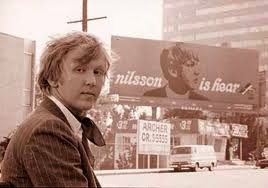
HARRY NILSSON: 'FLASH HARRY' (Originally released in 1980; reissued by Varese Sarabande, 2013)

It's about time, isn't it? Time and distance provide perspective. And it's about time time was afforded to this strange misfit record. In the context of its debut release date - when Adam & The Ants, Siouxsie & The Banshees, Public Image Limited, Gang Of Four and The Jam were filling the music press weeklies (yes, Pop was weekly then), and rap was emerging with The Sugarhill Gang - 'Flash Harry' must have seemed like the fat boy at the schoolkids' party, the outsider who - whilst everyone else was snogging or dancing or getting drunk and having the greatest time because it was (most probably) the first time (and it's all about time, isn't it?) - stood in the darkest corner with a plate of Wotsits in one hand and a glass of warm Tizer (into which a passer-by has deposited a cigarette) in the other. Sidelined, ignored. Who needed a record of an ageing MOR singer with his all-star band and expensive studios and songs about - about - about nothing, really? In the eye of the glowing fireball of 1980 pop there was Talking Heads asking where we could find ourselves, Mark E. Smith of The Fall telling us how he wrote 'Elastic Man', Elvis Costello crying that the riot act be read, Chrissie Hynde of The Pretenders ordering us to leave her out of our private life drama, and Joy Division pleading for us not to walk away in silence. This was urgent, essential and vibrant stuff, compared to which Harry Nilsson's silly seemingly-insignificant songs about making lemonade or the rain falling are beyond light-headed. Empty-headed could be nearer the mark.

  Even if one were a fan of Nilsson, or even someone cognisant of his past track record - and if you don't know, then you are advised to seek out and enjoy the 'RCA Albums Collection (1967-1977)' box which was also released in 2013; seventeen discs of ten years' worth of mostly great music, retailing for a mere £40 (if that); come on, The Who are charging over £80 for their measly four disc 'Tommy' reissue. Hang on, where was I? Oh yes; if you knew Nilsson's other records - you would be scratching your napper, wondering what had happened to his talent for song craft. Nilsson's gifts were peculiar and particular; he was a master of melodic minimalism, forging songs from the simplest musical forms. 'One' barely deviates from a single note, 'Coconut' is played on a single chord. His bare-bones approach is there at its purest in the piano demos included on the RCA box; often, it seems as though he's singing different lyrics over the same riff. He treated songwriting as exercises in structure. The differences occurred in the arrangements, the instrumental colourings, the lyrical attitudes adopted. He was a chameleon but his most identifiable talent was in making the saddest 'happy' songs and the happiest 'sad' songs. He had no time for the intricate brow-furrowing virtuoso complexities of a Zappa or the stylistic adherence to a narrow soundscape like My Bloody Valentine. A child could play a Nilsson tune on a piano with one finger and pretty much capture its essence. But the question would be, "Would a child want to play any of the songs on 'Flash Harry'?" Because these numbers have none of the old lyrical hallmarks of Nilsson (he was a short story teller, a master of the vignette).
  A glance at the songwriting credits signals that, creatively, the well must have been running dry for Harry. Of the ten songs, two are written by Eric Idle, another two are cover versions, five are by Nilsson in collaboration (the one written with John Lennon, 'Old Dirt Road', first appeared six years earlier), leaving only one solo Nilsson composition. In 1977 he composed all ten songs on his final RCA album, the sublime masterpiece 'Knnillssonn'. What had he been doing for the intervening three years? What's he playing at? What he certainly was not playing was catch-up with modern Pop. Lindsay Buckingham was determined to make Fleetwood Mac more dynamic and edgy and experimental, and 1980 saw the double-album commercial suicide note 'Tusk' hit the record racks to the general bewilderment of Mac fans (who knew what they wanted - more of the same, thank you - and they didn't want that). Ray Davies finally dumped the rock operas and returned to short, snappy comic pop songs, albeit audibly neutered for the American radio stations. Even The Rolling Stones tried to 'punk up' their act, although, by the sound of efforts like 'Where The Boys Go', the only Punk record they had ever heard was Sham 69's 'Hurry Up, Harry'.

  Thirty-three years on, 'Flash Harry' finally begins to make sense. This wasn't an attempt to recapture former glories, or to consolidate a new fan base by adopting a 'New Wave' attitude or sound. Instead, this was a strange new step into some hybrid form of ambient Pop. Listening to 'How Long Can Disco On?' where Harry sleepily croons over a loping white reggae skank - with the snare drum beats matched by blasts on a fire extinguisher (was this some oddball salute to his late hotel-and-drum-destroying pal Keith Moon?) - it's striking how little happens (lyrically, it's almost haiku), rhythmically or melodically, but how much it stays in the mind. Days later, you may find yourself semi-singing "D.J… he play… reggae". And this strange after-effect I find occurring with numbers that (in a sensible, proper world) don't add up. 'Best Move' and 'It's So Easy' are so inoffensive and light and pleasant and apparently forgettable, it's bizarre that they should make any impression. Why should they? They are not about anything, they have no immediate hook or arresting riff, so why should they take precedence in the jukebox of my mind over Truly Important New Songs by the likes of Savages, Lorde and Kurt Vile? Conversely, the one story song, 'I've Got It!', about having the horn for a prostitute (only to find that she is a he and he has the horn too), is lyrically complex and difficult to follow. This isn't helped by Harry sounding heavily refreshed. Notoriously, he decided in the mid-70s to make the recording sessions a party and had alcoholic bars installed in the studio, with the tab picked up by RCA. The recent documentary, 'Who Is Harry Nilsson (And Why Is Everybody Talking About Him)?', was ghost-narrated by Nilsson from a series of taped interviews and it's quite alarming, even in this jaded age, to hear how smashed and slurred his voice is. And a point to consider when thinking about Harry's music is the effects, side and full-on and after, the laughing juice had on his creative impulses and the results. The closer on 1976's '…That's The Way It Is' is a calypso-cum-collapso ditty called 'Zombie Jamboree' where Harry is barely coherent through an enthusiastic burst of turps-nudging. Stuffed shirts may bemoan the fall from grace, that the man who soared such heights with his performance of 'Without You' should now be publicly disgraced, caught burbling face-down in a puke-strewn gutter. Yes, well, that is a moot point, but my painter friend Donald made the astute and correct observation that 'Zombie Jamboree' sounds like a Joe Strummer-sung track from The Clash's 'Sandinista!'  
   For reasons that have never fully been explained - which is good, because it means that we have something to talk about - Nilsson never performed a live show (apart from the occasional guest appearance on someone else's stage), never toured, never asked people to pay for a ticket to see him. We can all theorise as to the whys and wherefores. Fear (in some form) has something to do with it. Purity is another (having attained the best performances and sound possible on record, why ruin it by playing cavernous, echoey halls with rotten acoustics, terrible lighting and so on?). Also at work here is the belief that Pop is a young person's game and, at 39 (when 'Flash Harry' popped out), he might have felt that it was time to withdraw out of the limelight with some semblance of dignity. In fact, this was his final release - his last years before his death in 1994 were devoted to failed stabs at film production, and a small business concerning audio cassette books (including Graham Chapman's 'A Liar's Autobiography') - but, even here, he sometimes, somehow, seems to be barely present. An alternative title for the album could have been a play on the hit Peter Sellers film at the time, 'Being There' - 'Almost There', perhaps, or 'Not Being Here'. He appears and then disappears in a 'Flash' from the material. He's not even on the opening song! It's almost as though Nilsson has wilfully undermined himself by handing his producer's reins over to Steve Cropper, used the songwriting skills of others (the most Nilssonesque song in terms of subject matter and melodic construct is his bouncy cover of 'Always Look On The Bright Side Of Life' from the Monty Python film 'Life Of Brian'). It's as though he's passing the baton on to others and, with a tip of the titfer, saying, "I'm off, chaps. Thanks for the ride."

   Such is the nature of Art, it's often the case that the less there is in the artwork (a Rothko painting, or a minimalist composition), the more one can see or hear in it. The reverse is certainly true with Bob Dylan who, even at this late stage in the game, confuses quantity for quality and will happily trot out 10 minute songs that have absolutely nothing worth hearing. And though 'Flash Harry' is neither the most representative or the best (whatever that means) Nilsson collection, it throws up - sorry to use that expression - a whole raft of questions about Pop music (its possibilities, its highways and byways, where it can go, where it mustn't, Pop as mode of personal expression, the depths and shallows). It is, in its own small, modest way, a brave work. It dares to be silly (when music became intensely serious) and to be bland (when Pop's very nature is to grab you violently and scream in your face). It may not be a great work of Art but it's a great work of Life. It's about -

  "Time, gentlemen, please!"    

And finally... HAPPY BIRTHDAY TO... John Lennon whose special day was October the 9th

Lennon says: "We live in a world where we have to hide to make love, while violence is practised in broad day light."